
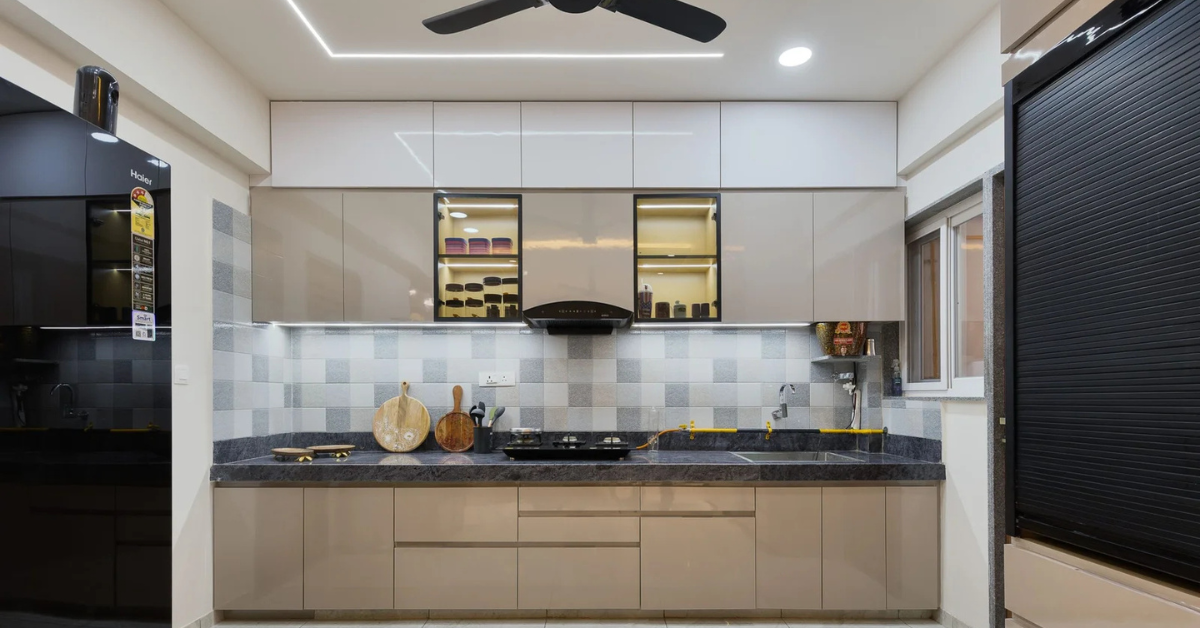
The kitchen is now the focal point of the house, where families congregate, discussions take place and creativity develops. It is no longer merely a place to prepare. The kitchen should have lighting that improves both its usefulness and atmosphere since it is one of the most social yet utilitarian areas of a home. An ordinary kitchen may be made into a cosy, welcoming and aesthetically pleasing area with the correct lighting design. For those wishing to improve their kitchen design, the options are virtually limitless, ranging from statement fixtures to tiered lighting.
Kitchen Lighting Types:
- Pendant Light: It serves as a gorgeous focus point for guests and gives the kitchen hue, energy and flair.
- Cabinet Light: It is helpful in improving visibility and excellent for highlighting the contents of cabinets.
- Track Light: It is installed on a curved track mechanism that focuses the lights in the direction of essential task areas.
- Recessed Light: It is positioned close to work areas and can be utilised for general lighting.
The Worth of Lighting in Kitchens
A kitchen’s ambience and utility are greatly influenced by its lighting. In addition to increasing visibility for cleaning and cooking, a brightly lit modular kitchen also improves the overall aesthetics of the design. Even the most exquisitely designed kitchen can look drab, unwelcoming with poor lighting, but careful lighting decisions can draw attention to architectural details, textures and colours.
Layering, combining ambient, task and accent lighting to create a pleasing balance, is the primary focus of contemporary kitchen lighting. This method guarantees that every area of the kitchen is both aesthetically pleasing and helpful.
- Accent Lighting: It highlights special features and decor in the kitchen, creating stunning focal points for visitors. It consists of LED bulbs, wall sconces, movable lights and spotlights that highlight artwork or a kitchen backsplash.
- Ambient Lighting: It evenly illuminates the kitchen, making everyday kitchen activities easier. It includes recessed lights, flush-mounted fixtures and glass pendant lamps. You may also utilise dimmer lights to change the ambient light level according to the activity and time of day.
- Task lighting: To increase visibility and safety while cooking, it is positioned where particular kitchen chores are carried out. It can be utilised as an under-cabinet light, a pendant light over a kitchen island or a wall lamp with concentrated light.
Tips on Ideal Lighting in the Kitchen
- Layer the lighting: For a balanced effect, combine task, surroundings and accent lighting.
- Select the appropriate colour temperature: Cool white (4000K–5000K) improves focus, while warm white (2700K–3000K) produces a friendly atmosphere.
- Make use of dimmers: Flexibility for various tasks and moods is made possible with adjustable lighting.
- Emphasise important areas: Pay attention to eating areas, islands and countertops for both practicality and aesthetics.
- Combine practicality and beauty: Choose fixtures that serve a purpose and blend in with the kitchen’s design theme.
Also Read – Complete Guide to Choosing the Right Kitchen Layout
Conclusion
A kitchen can become a cosy, friendly and stylish room with the help of lighting. Homeowners can design a kitchen that is both functional and aesthetically pleasing by blending ambient, task, voice and decorative lighting. The appropriate lighting options can make all the difference in a kitchen, whether it is a sleek modern design or a comfortable family kitchen.
Montdor Interior provides creative interior design solutions that combine light, texture, elegance to create genuinely welcoming places for individuals looking for professional advice in creating kitchens that strike a balance between beauty, comfort and functionality.